
PROCUREMENT & DVT EDUCATION
What Is an Intermittent Pneumatic Compression Device?
Learn how intermittent pneumatic compression devices work, where they fit into DVT prevention workflows, and what hospitals and distributors should check before purchasing.
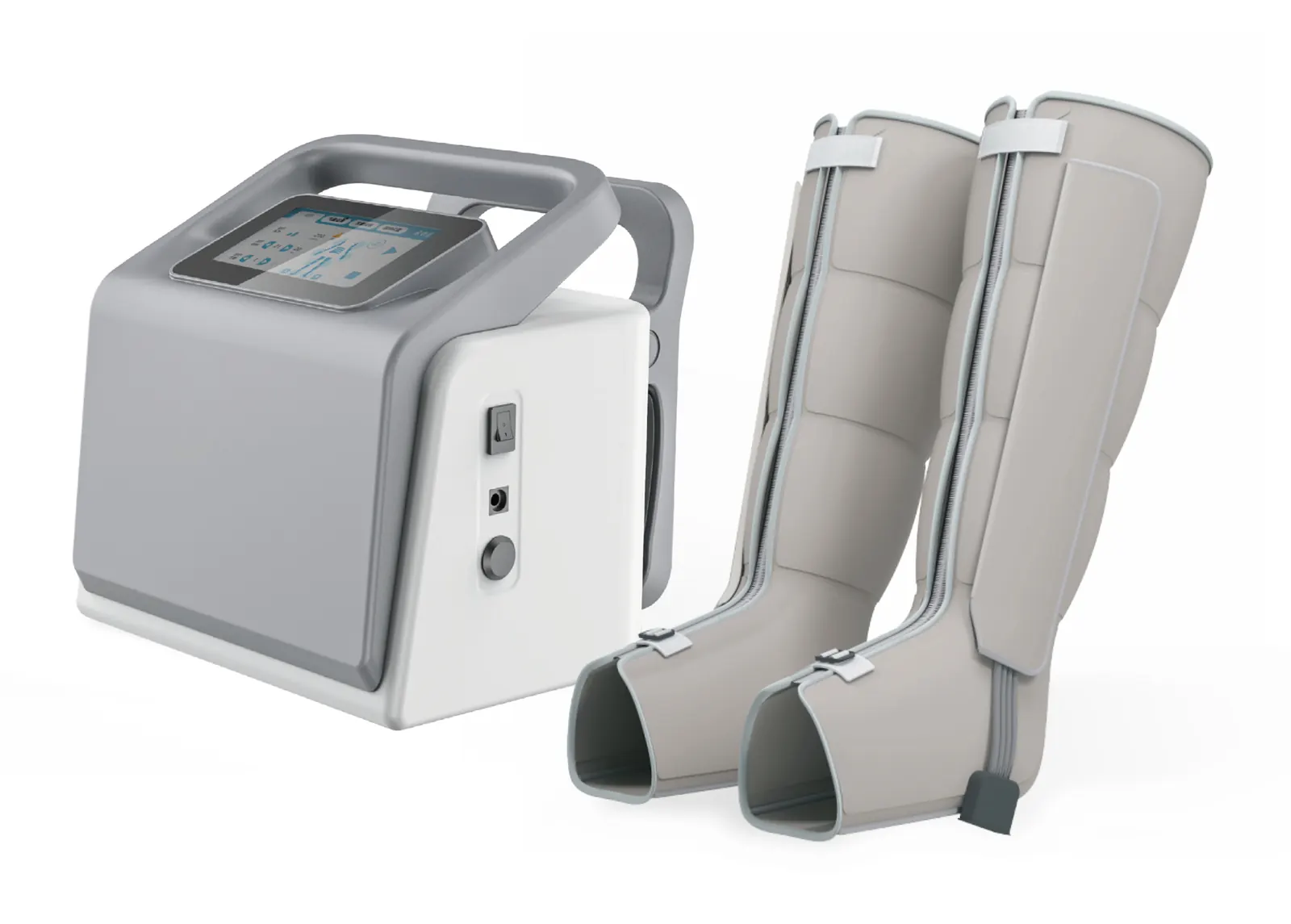
Quick answer: An intermittent pneumatic compression device repeatedly inflates and releases air chambers in a wearable garment. Procurement teams should evaluate the complete pump, garment, alarm, battery and documentation package for the intended care setting.
An intermittent pneumatic compression device is a powered system that repeatedly inflates and deflates air chambers inside a wearable garment. The pressure cycles compress the leg or foot, helping support venous blood movement when a patient is not walking normally. In hospitals, these devices are commonly considered as part of a venous thromboembolism prevention plan for selected patients with limited mobility.
That definition is simple. Choosing an appropriate system is not.
A pump, a pair of sleeves, and a pressure specification do not tell a procurement team whether the system will work reliably on a ward, remain comfortable during extended use, or fit the facility’s clinical protocol. The practical differences appear in compression sequencing, garment design, alarm behavior, battery performance, cleaning requirements, and the availability of replacement consumables.
How IPC differs from static compression
Compression stockings apply relatively steady pressure through an elastic garment. An intermittent pneumatic compression device uses controlled air cycles, producing periods of compression followed by release.
Sequential systems usually inflate separate garment chambers in a defined order. In a leg sleeve, the chamber farther from the torso may inflate before the chambers above it. The exact sequence, pressure profile, and cycle timing depend on the device design.
This distinction matters during product evaluation. “Sequential compression” is sometimes used loosely in catalogues, even when the documentation does not clearly explain the chamber sequence. Buyers should request the operating manual or technical specification rather than relying on the product name.
An IPC system also should not be treated as an automatic substitute for medication, early mobilization, or compression stockings. Its role depends on the patient, the clinical setting, contraindications, and the facility’s protocol. Clinical teams must make those decisions using the device’s authorized intended use and applicable guidance.
The pump is only half of the system
Procurement discussions often focus on the pump because it carries the electronics and the most visible specifications. In daily use, the garment can have an equally large effect on performance.
A sleeve that fits poorly may shift, fold, create localized pressure, or lead staff to stop therapy early. Garment length also changes the workflow. Calf, calf-thigh, and foot configurations are not interchangeable simply because they connect to the same type of pump.
Ask the supplier which garment configurations are approved for each model and whether the pump automatically recognizes them. Check the available size range against the facility’s actual patient population—not an assumed “standard adult” group. Bariatric options, left/right orientation, extension panels, tubing length, and single-patient-use policies can all affect purchasing decisions.
Connector design deserves attention as well. A secure connection reduces accidental disconnection, but it should remain manageable for staff wearing gloves. Proprietary connectors may improve system control while also tying the buyer to a particular consumables supply chain. That trade-off should be understood before the pump fleet is installed.
Pressure numbers do not tell the whole story
Two intermittent pneumatic compression devices can display the same pressure while behaving differently in use. Chamber volume, inflation speed, pressure tolerance, cycle timing, garment construction, and sensing method all influence the delivered compression pattern.
Procurement teams should therefore avoid selecting equipment from the maximum pressure figure alone. More useful questions include:
- Is the pressure fixed, adjustable, or protocol-controlled?
- Does the device monitor pressure at the pump or within the garment circuit?
- What happens when the sleeve is loose, kinked, or disconnected?
- Does the system maintain its programmed cycle as battery charge decreases?
- Are treatment settings retained after the device is paused or powered down?
The answers should come from current model documentation. Sales language such as “smart compression” or “precise pressure” has little value without an explanation of what is sensed, how an abnormal condition is detected, and what the operator sees when it occurs.
Alarm design affects real-world compliance
A DVT compression device may be technically capable yet frustrating in a busy clinical environment. Repeated nuisance alarms can result in interrupted use, especially when the alarm message does not help staff locate the cause.
Useful alarm behavior distinguishes between common problems such as a disconnected tube, blocked airflow, abnormal pressure, or low battery. The display should provide an actionable message rather than a generic fault code that requires staff to find a manual.
During a product trial, simulate ordinary ward problems. Partially loosen a garment, bend the tubing, disconnect one hose, and operate the pump near the end of its battery charge. Observe how quickly the device responds and whether a nurse unfamiliar with the model can resolve the issue without technical support.
Alarm volume matters, but so does alarm fatigue. A louder device is not necessarily a safer one if staff cannot identify what needs attention.
Portability means more than low weight
A portable intermittent pneumatic compression device should support the intended care pathway, not merely have a carrying handle.
For inpatient mobility, look at how the pump mounts to a bed or transport equipment, whether the tubing becomes a trip hazard, and how long the battery operates under normal compression cycles. For home-care workflows, examine charger simplicity, button layout, accidental setting changes, and the instructions supplied to patients and caregivers.
Published battery duration should be interpreted carefully. Test conditions may not reflect continuous clinical use, repeated alarms, battery aging, or frequent start-stop operation. Buyers should ask whether the battery is replaceable, how capacity is checked during preventive maintenance, and what happens when a battery reaches the end of its service life.
The same scrutiny applies to cleaning. Smooth external surfaces are helpful, but gaps around buttons, mounting clips, air ports, and seams can increase cleaning time. Confirm the validated cleaning agents and procedures in the instructions for use.
What hospital buyers should verify before purchasing
A serious evaluation goes beyond unit price. Request the current specifications, instructions for use, garment size matrix, alarm guide, battery information, cleaning instructions, warranty terms, and applicable regulatory documentation for the destination market.
Consumables deserve a separate supply review. Confirm lead times, minimum order quantities, shelf-life information where applicable, packaging configuration, and the process for handling garment shortages. A competitively priced pump can become an operational problem if replacement sleeves are difficult to obtain.
Distributors and importers need additional evidence. Product labels, packaging, language requirements, importer responsibilities, complaint handling, traceability, and post-market support should be discussed before commercial terms are finalized. A certificate supplied for one configuration should never be assumed to cover every pump, garment, accessory, or market.
Matching the device to the workflow
There is no universally best IPC system. A hospital may prioritize durable mounting, clear alarms, multiple garment options, and dependable consumables supply. A home-care provider may place more weight on battery operation, low device weight, simple controls, and caregiver training. A distributor must consider both clinical usability and the documentation needed for legal placement in its market.
The strongest purchasing decision begins with the workflow: who will apply the garment, where therapy will occur, which patients are expected to use it, and how faults or supply interruptions will be handled.
HuanYu Health offers IPC and DVT compression configurations intended for different clinical and care environments. Product specifications, intended use, garment options, and regulatory availability vary by model and destination country. Request the current IPC/DVT catalogue and model-specific documentation before selecting a configuration.
DOCUMENT-LED SOURCING
Need current specifications or a quotation?
Tell us the destination market, care setting, preferred garment coverage and estimated quantity.
Contact HuanYu HealthWeChat / WhatsApp / Mobile: +86 158 5139 6108